Analysis of Communal Kitchen arpillera
Item
-
Title
-
Analysis of Communal Kitchen arpillera
-
extracted text
-
Susan Palmentera-Reid
GEOG 331 - Geography of Latin America
April 10, 2026
Arpillera Analysis
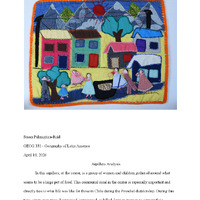
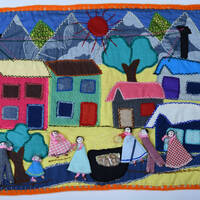
In this arpillera, at the center, is a group of women and children gathered around what
seems to be a large pot of food. This communal meal in the center is especially important and
directly ties to what life was like for those in Chile during the Pinochet dictatorship. During this
time, many men were disappeared, imprisoned, or killed, leaving women to support their
�families on their own. The existing gender roles made it especially difficult for women to take on
this responsibility, since they often had very limited access to stable jobs and income. These
challenges amplified the need for communities to come together during this time and that is
exactly what this arpillera is depicting. It seems that women would come together and create
communal kitchens where people in the neighborhood could come together and share food and
resources. It highlights not just the struggle to survive under this dictatorship, but also how
people relied on each other and the ways communities would come together showing how this
collective support became necessary during the dictatorship. Further, something I noticed is how
central women are in this piece, as they seem to be the ones primarily taking care of their
community. Although the scene at first looks like it's just showing everyday responsibilities, a
community coming together like this is a form of resistance to the Pinochet dictatorship. This
connects to broader themes of women playing a huge role in resisting the dictatorship, both
through organizing their communities and making arpilleras like this one. The background of this
arpillera, which includes the Andes Mountains and a bright red sun, is also important. These
elements appear in many arpilleras and reflect the geographical features that make up Chile’s
identity, but they can also be seen as symbols of hope and resilience even in these difficult
conditions. Overall, this arpillera shows how everyday life and political struggles were deeply
connected with the image of women coming together around a shared meal representing both
survival and resistance to the dictatorship.
�
 Communal kitchen