Taller de arpilleras
Item
-
Title
-
Taller de arpilleras
-
Description
-
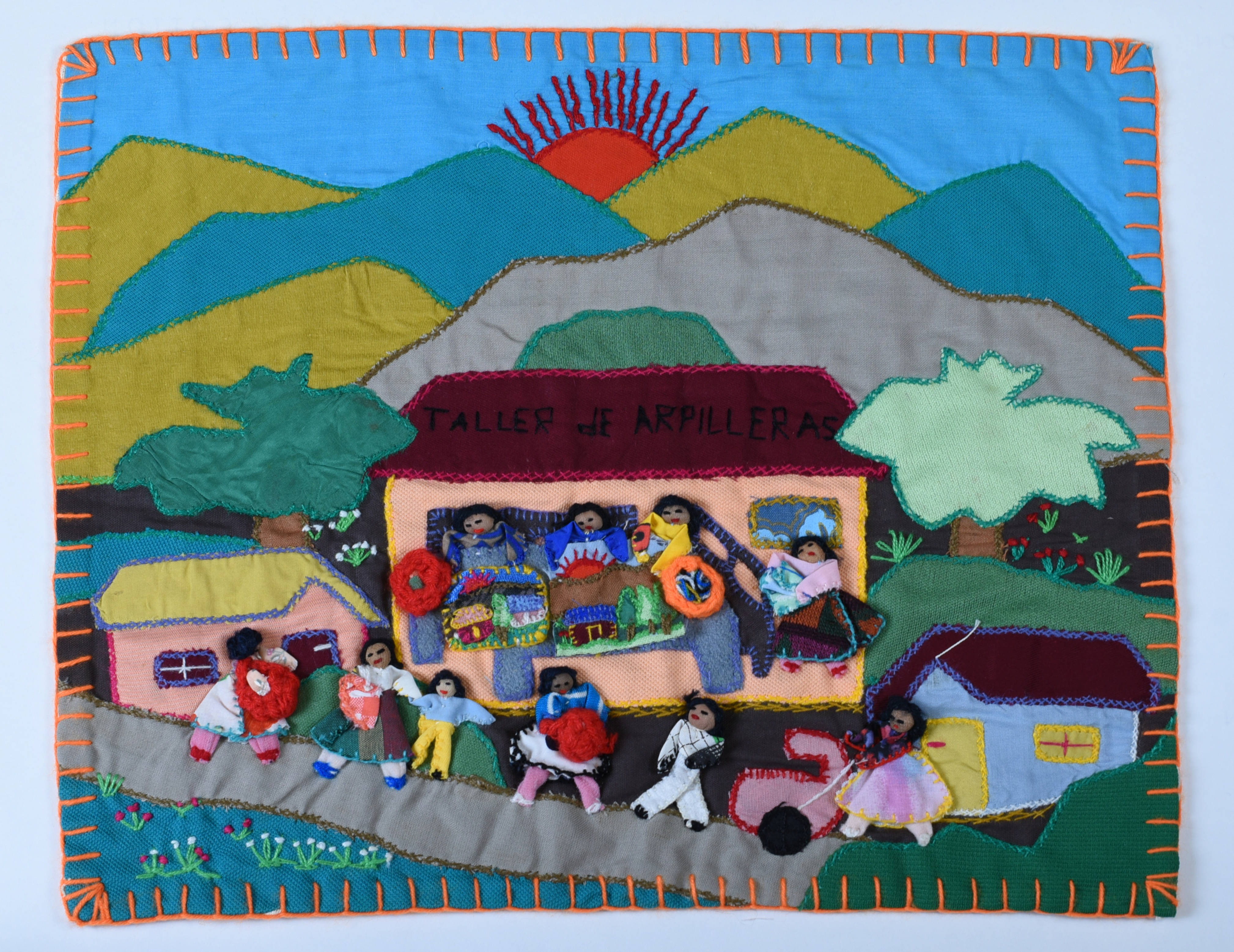
In this arpillera, the primary theme is community and its transformative power in the changing roles of women. In the “TALLER DE ARPILLERAS” building, women are shown creating arpilleras together. For many women, this may have been their first time feeling community outside of their direct family, a community for learning and empathizing. Through both the art created in each arpillera and the conversations had at workshops, these women were given a space to share in grief (Agosin, 1996) and reflect on their experiences (Bacic, 2015). Additionally, women shown both in the arpillera workshop and on the streets showcase the sense of purpose women worked towards cultivating. Rather than solely being homemakers, women are coming together in this arpillera to make their voices heard. In particular, one could interpret the women marching on the street, arpilleras and materials in hand, as walking towards a formal, contested space, using artistic expression to challenge preconceived notions (Bacic, 2015).
In both the depiction of community and the more minor details of this arpillera, an additional theme of hope emerges. The bright colors of the homes, rising sun, and flowers serve as signs of hope and growth in a country coming out of a period of darkness. Like many arpilleras, this one is set with a backdrop of the Andes Mountains, a range which spans the length of Chile. The sun shining in the center of the Andes seems to communicate that, despite the brutal history of the dictatorship, this region is for all people (Bacic, 2015). Even still, the stroller being pushed by the woman on the right is empty, an artistic choice that is likely no mistake. In an arpillera centered around hope, the harsh reality that many children had disappeared under the dictatorship is still communicated.
-
Contributor
-
Analysis by Jordyn Van Santen
 Taller de arpillera