Donde Están?
Item
-
Title
-
Donde Están?
-
Description
-
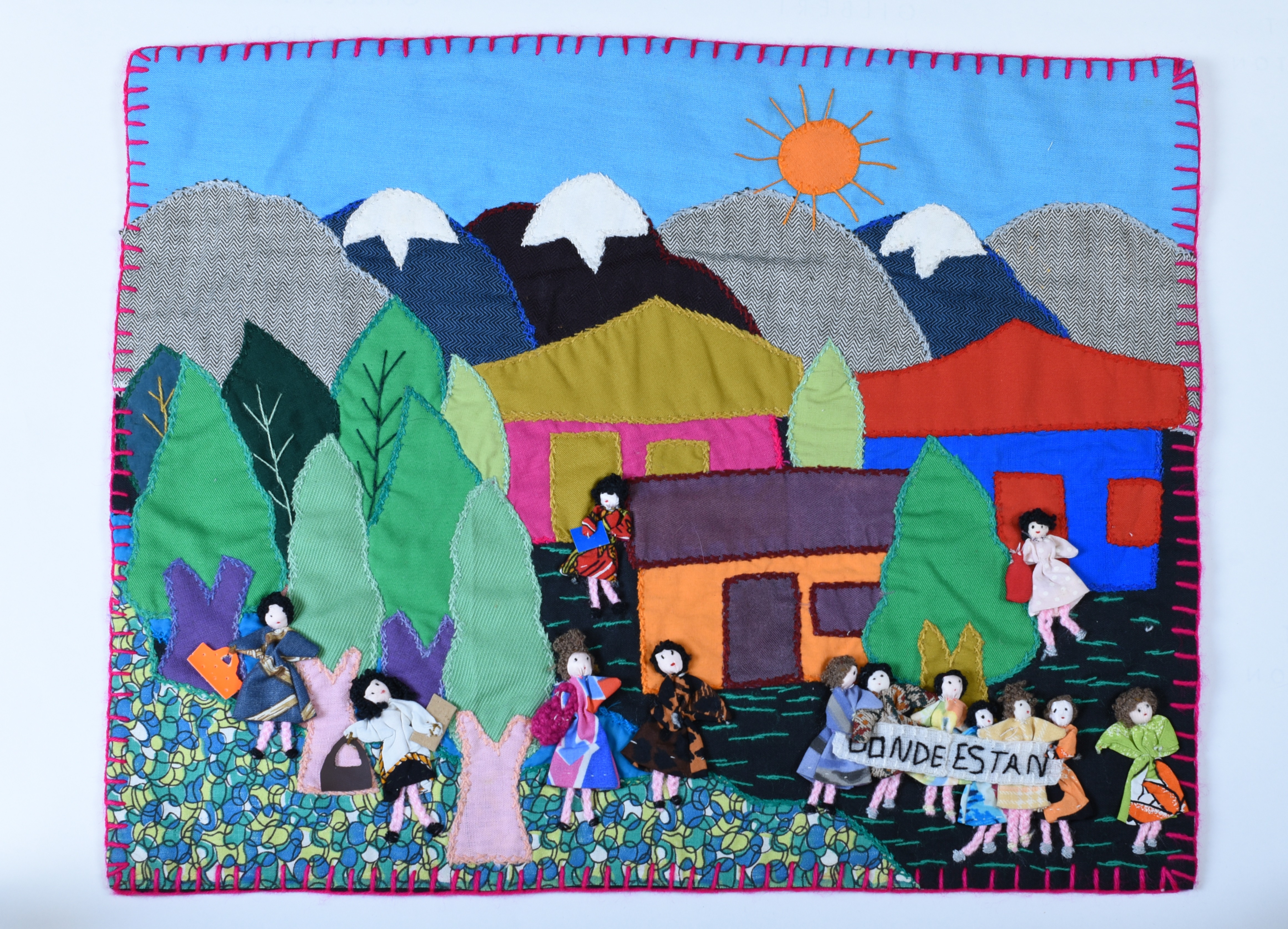
The Pinochet dictatorship in Chile was an incredibly violent 17-year period. Thousands of people were tortured, kidnapped, and “disappeared” by this brutal regime. With such widespread, violent means of suppressing political resistance, Chilean women turned to artistic resistance in the form of arpilleras. Arpilleras typically depict military violence or everyday life in Chile. Even the arpilleras that depict everyday life show some aspects of the Pinochet dictatorship; they leave things out, or alter small details to give an uncanny feeling that something isn’t right.
This arpillera only depicts women. While women were targeted by the Pinochet regime, and reported their children being stolen and adopted by military families, men were more commonly targeted which is why there are none in this arpillera. The women in the scene are shown doing many things: dancing, walking in the forest (presumably to collect food), walking around the houses, and holding a sign that says “Donde Están” (where are they). Without context, this almost looks like normal life in Chile; however, we know the women in the scene are grieving the loss of their sons, fathers, brothers, or husbands, while continuing to live and work as if nothing had happened.
All of the women in the arpillera are excellently dressed. The attention to detail on the dresses, all of which are well designed and beautifully posed, is incredibly impressive given that they are only a few inches tall. Similarly, the hair is very well done; despite being on a head the size of a blueberry, every woman has a unique hairstyle that is textured and styled. Femininity was a powerful tool of protest under Pinochet. It allowed women to protest, create arpilleras, and partially protected them from being disappeared. However, it didn’t spare them from the cruelty of disappearances. People who weren’t disappeared still had to live with the grief of losing people they knew.
-
Contributor
-
Analysis by Curtis Baldwin
 Donde Están? arpillera