Tanks
Item
-
Title
-
Tanks
-
Description
-
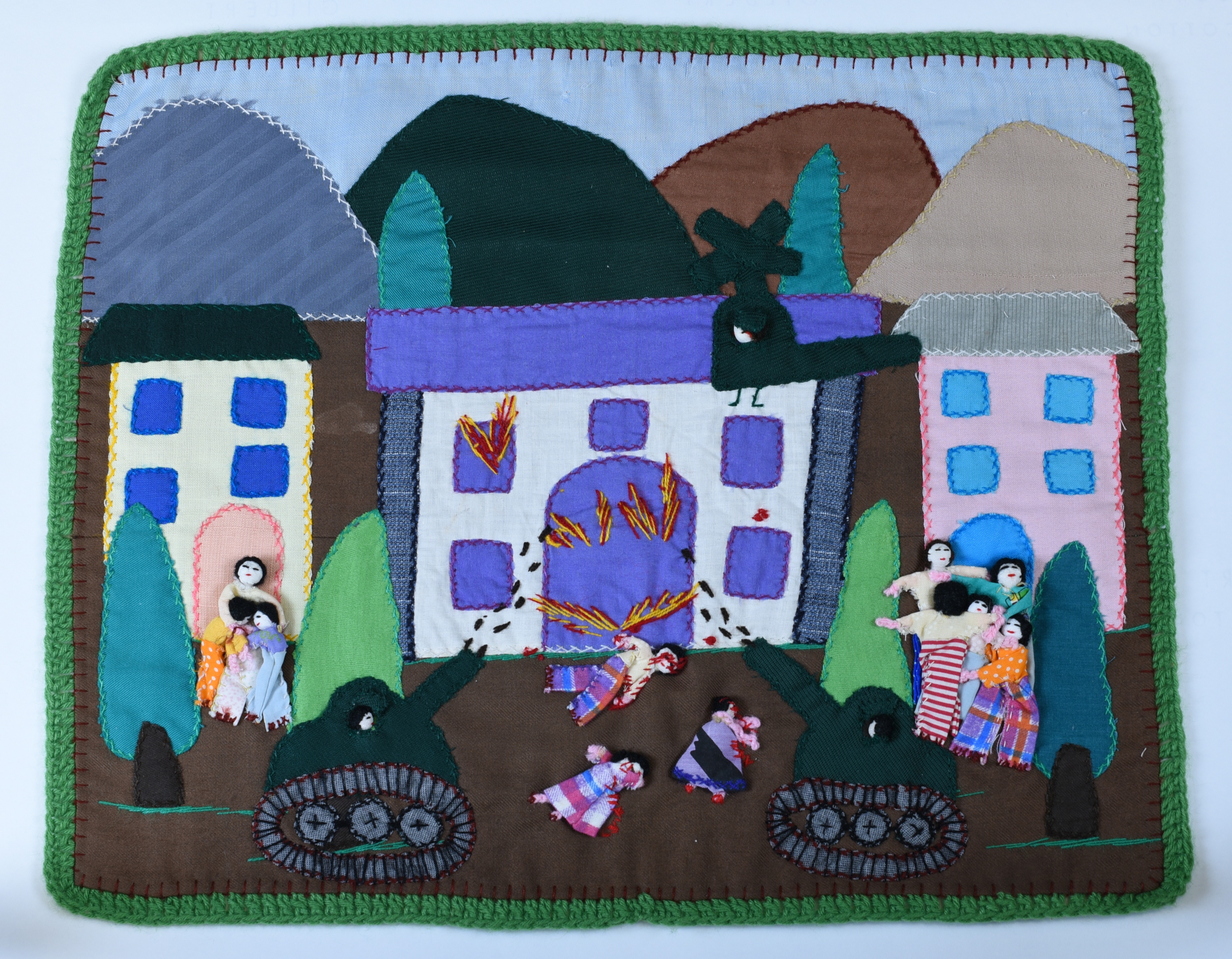
This arpillera features tanks firing at buildings and civilians lying in the streets between the devastation. As the violence breaks out around them, groups of people are seen huddled together, appearing frozen in fear. The bodies' positioning highlights their vulnerability, and the setting instantly conveys chaos and horror. The bodies on the ground imply that the violence is immediate and intimate, impacting common people as opposed to simply troops or political figures, rather than being far-off or abstract. I was first drawn to the artwork because of its clear depiction of suffering, which effectively communicates a strong emotional message without the use of words.
The tanks and helicopter make the whole scene feel overwhelming, like there’s no way out. The way the figures are posed, with their arms up or grouped together, really shows fear and panic. However, the way they are all holding each other hints at themes of community, family and maternal care.
This scene first includes a common theme found in many other arpilleras, the Andes mountains. The Andes mountains are an extremely important part of the recognizable landscape, Chilean culture and natural resources in Chile. This arpillera in particular has a sunless sky made with a grey colored fabric. The sun in arpilleras typically represents hope in such a hopeless time. Without the sun and bright colored sky, the maker of this arpillera wanted to express their feelings of hopelessness and sadness during this time. The scene also depicts a graphic representation of what the military junta did in communities around Chile.
At the same time, I don’t think this is only about violence. It also feels like resistance. These pieces were shared through church groups and even sent to other countries, which helped bring attention to what was happening in Chile. The mountains and simple buildings in the background are reminders of what was happening in normal, everyday places. Overall, I see this arpillera as showing both the fear people lived through and the strength it took to speak out and fight back in creative ways.
-
Contributor
-
Analysis by Eli Aldana, Grace Lichthardt, Tyler Marquez, Will Routh, and Mia Sturm
 Tanks
Tanks