Analysis of Firing Squad arpillera
Item
-
Title
-
Analysis of Firing Squad arpillera
-
extracted text
-
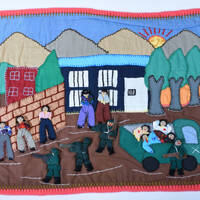
The arpillera I observed depicts a powerful and emotional scene that reflects themes of
violence, fear, and political repression. Arpilleras are hand-sewn textile artworks traditionally
created in Chile, often by women whose family members were victims of political violence.
These arpilleras were used as a way to document experiences, express grief, and communicate
stories about injustice to the outside world. Through its materials, imagery, and setting, the
arpillera I analyzed appears to represent the experiences of civilians who were detained or
forcibly disappeared during the Pinochet period. It also raises questions about how many stories
like this went undocumented and how many families were left without answers.
One of the first things I noticed about the arpillera was the materials used to construct the
figures and objects within the scene. The piece appears to be made from repurposed materials
such as pieces of clothing, yarn, and leather. The fabric used for the figures may represent
clothing that once belonged to people in the community, which could symbolize the lives of
those who were affected by the events depicted. The yarn used for the hair and the leather-like
material used for the soldiers’ guns add texture and detail to the artwork. These materials reflect
the traditional techniques used in many arpilleras, which were often made from scraps of fabric
that women had available in their homes. As noted by Teresa Bacic in Arpilleras in Contested
Spaces, arpilleras are three-dimensional appliquéd textiles made on a backing of strong fabric,
often from reused potato or flour sacks, with cloth figures sewn on separately to create a layered
and personalized effect. Using recycled materials also gives the piece a strong emotional and
symbolic quality, as the fabrics may represent the everyday lives of the people who experienced
these events. It seems as though some of these materials belonged to actual victims or their
families, further deepening the emotional connection of the piece.
�The imagery shown in the arpillera suggests a scene of detention and violence. I noticed
figures who were blindfolded with their hands behind their backs, which suggests that they have
been captured or arrested. In the background, there are bodies being transported in the back of a
truck surrounded by soldiers carrying guns. These details imply that civilians are being taken
away by military forces. This imagery strongly reflects the idea of forced disappearance, a
practice in which individuals were secretly detained or killed by the government. The overall
theme of the arpillera appears to communicate fear, loss, and injustice experienced by
communities during times of political repression. It also raises the question of how frequently
scenes like this occurred and how communities coped with the constant threat of violence.
The broader geographic and historical context of the arpillera likely relates to Chile
during the military dictatorship of Augusto Pinochet. During this period, many people were
arrested, tortured, or forcibly disappeared by the government. Families often did not know what
had happened to their loved ones, which caused widespread fear and grief throughout the
country. Women whose family members had been taken often created arpilleras as a form of
protest and storytelling. These textiles were sometimes secretly exported and sold internationally
in order to raise awareness about human rights abuses occurring in Chile. This makes me
consider how dangerous it must have been for these women to create and share these works, and
how much courage it took to resist in this way.
The background of the arpillera also helps establish its geographic context. The
mountains and sun depicted behind the scene may represent the Andes Mountains, which are a
major feature of the Chilean landscape. Including these natural elements connects the personal
experiences of the people shown in the arpillera to the larger geographic environment in which
these events occurred. It may also symbolize how these tragedies were not isolated incidents, but
�rather widespread across the country. Overall, this arpillera serves not only as a piece of art but
also as a powerful historical and geographic record of the suffering and resilience of
communities during a difficult time in Chile’s history. It leaves the viewer questioning how art
can serve as both evidence and resistance in times of injustice.
Abstract/Executive summary:
This analysis focuses on a specific arpillera that depicts a scene of detention and
violence, likely representing the forced disappearance of civilians during the Pinochet period in
Chile. The artwork uses repurposed materials such as fabric, yarn, and leather to construct
figures of blindfolded individuals and armed soldiers, emphasizing both the humanity of the
victims and the harshness of the violence depicted. The image of civilians being transported in a
truck and the presence of military forces, suggests fear, loss, and political repression. The
background, possibly representing the Andes Mountains, situates the scene within a recognizable
geographic context. Overall, this arpillera represents the experiences of people affected by
political violence and serves as a way to remember and communicate these events.
�
 Firing squad