Arpilleras are patchwork tapestries created by Chilean women to chronicle their lives during the dictatorship of General Augosto Pinochet from 1973-1990. In the context of widespread human rights violations and the disappearances of their family members, women in the shantytowns of Santiago formed clandestine workshops to create arpilleras using everyday materials such as burlap sacks (where the name arpillera comes from) and scraps of fabric, including clothing from loved ones killed or disappeared by the regime in scenes. With the assistance of the Vicaria de Solidaridad, women sold arpilleras to allies in the Global North to raise funds and awareness about the life under the dictatorship.
Student analysis of Augustana's arpillera collection
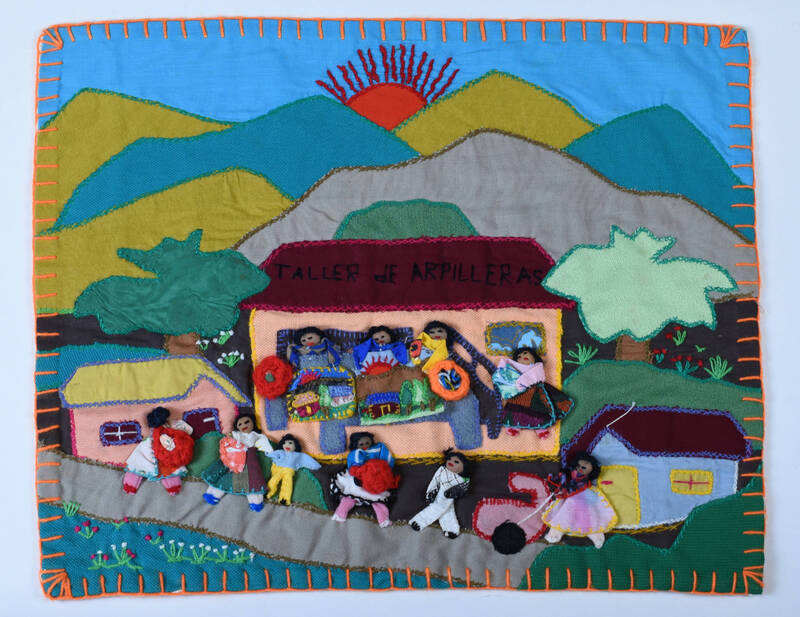
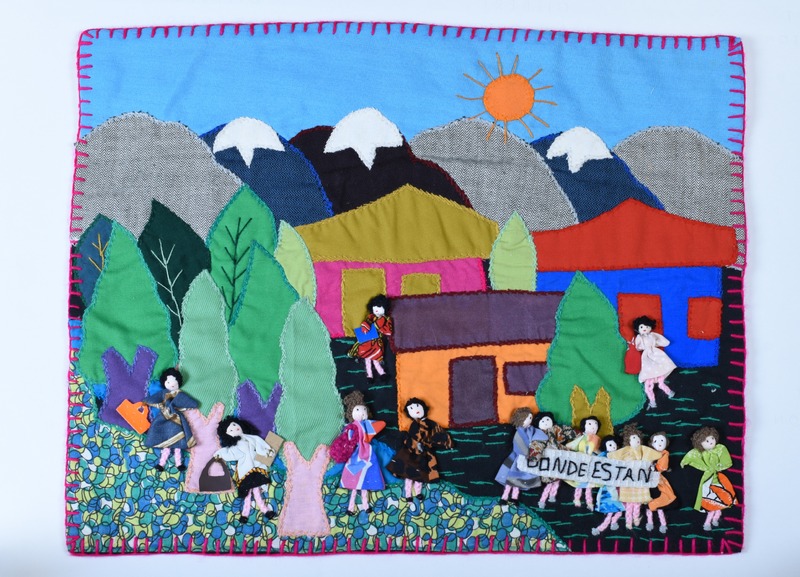
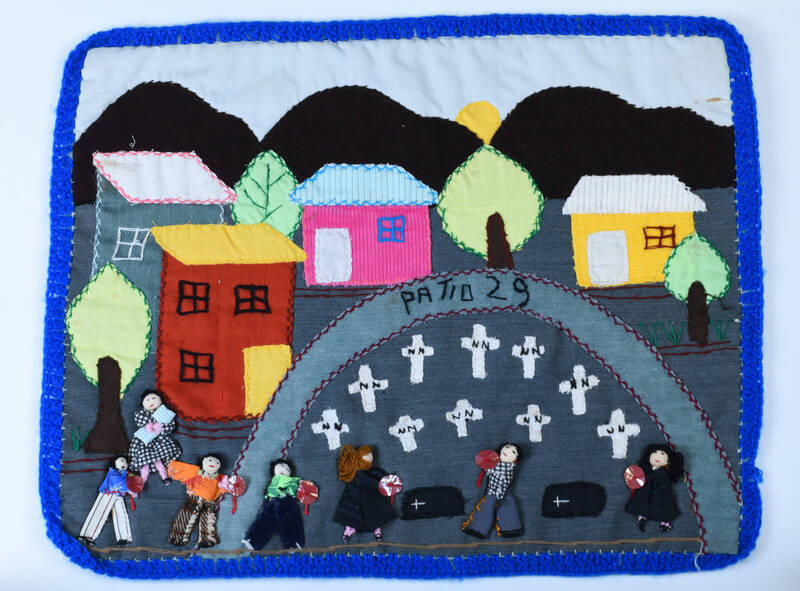
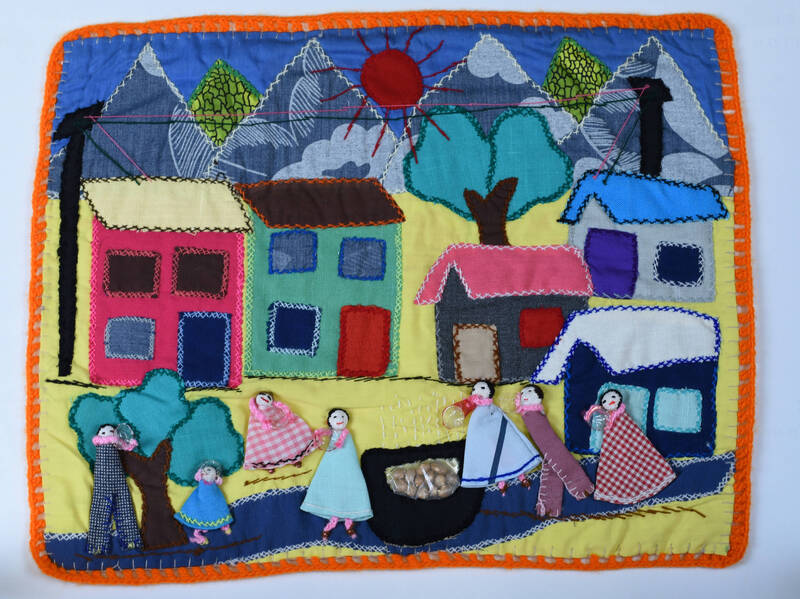
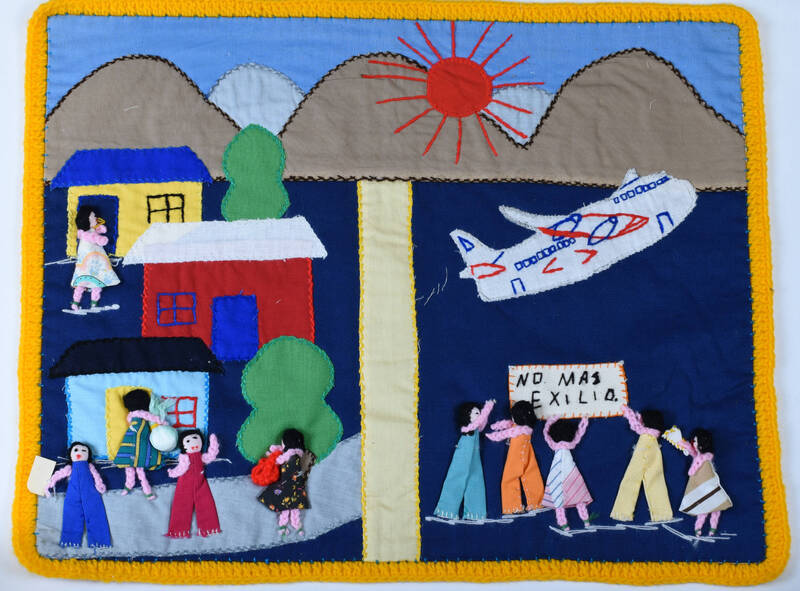
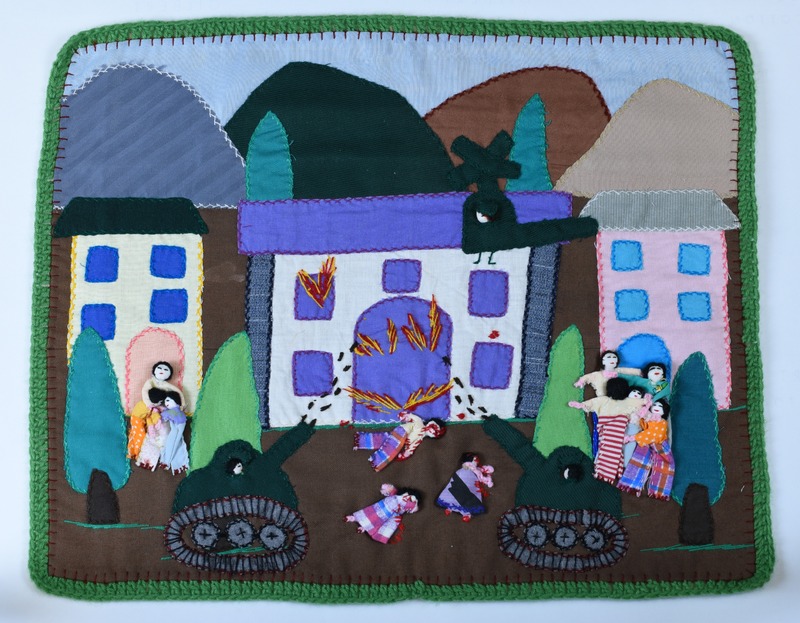
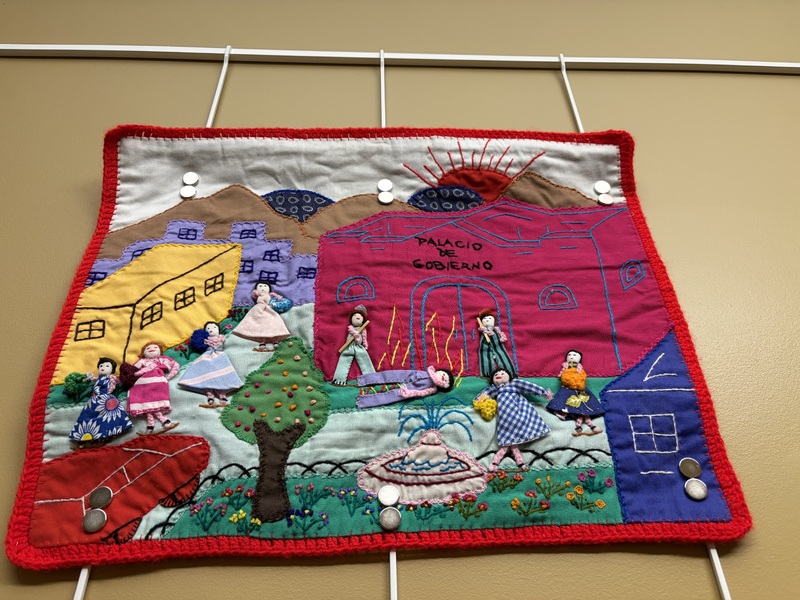
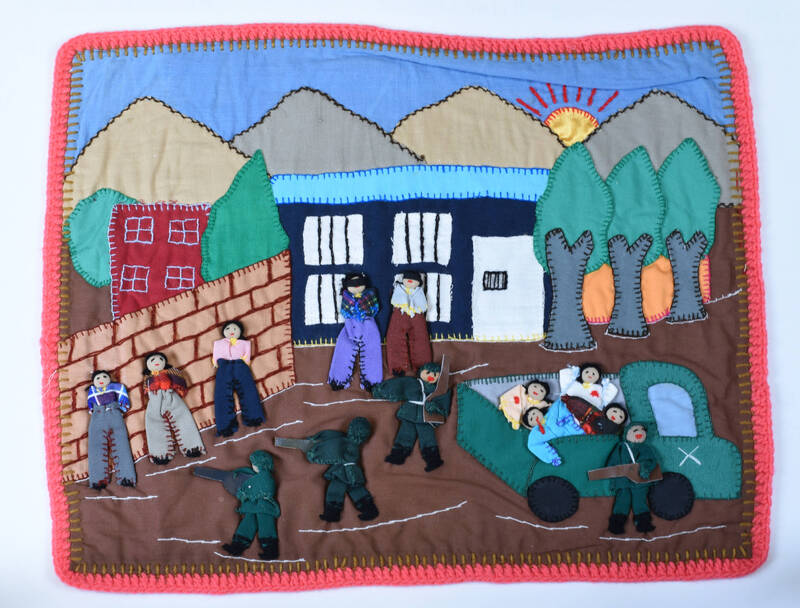
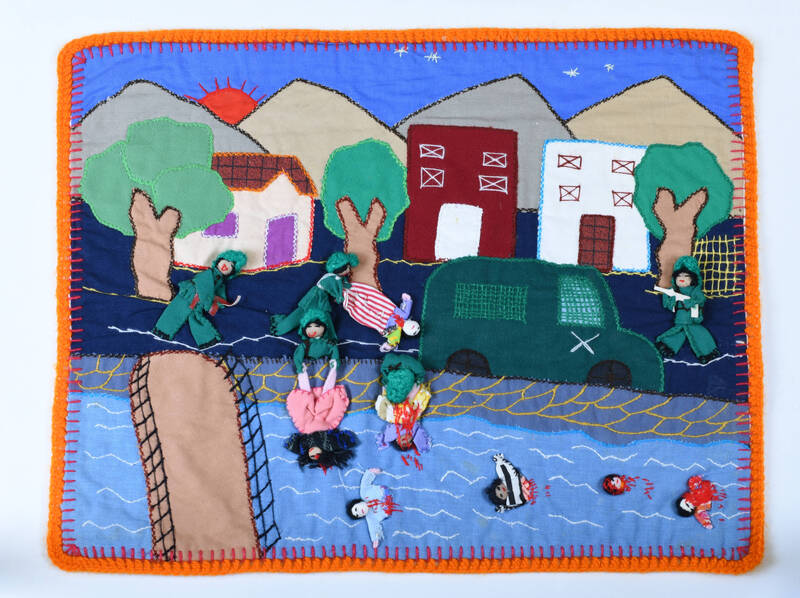
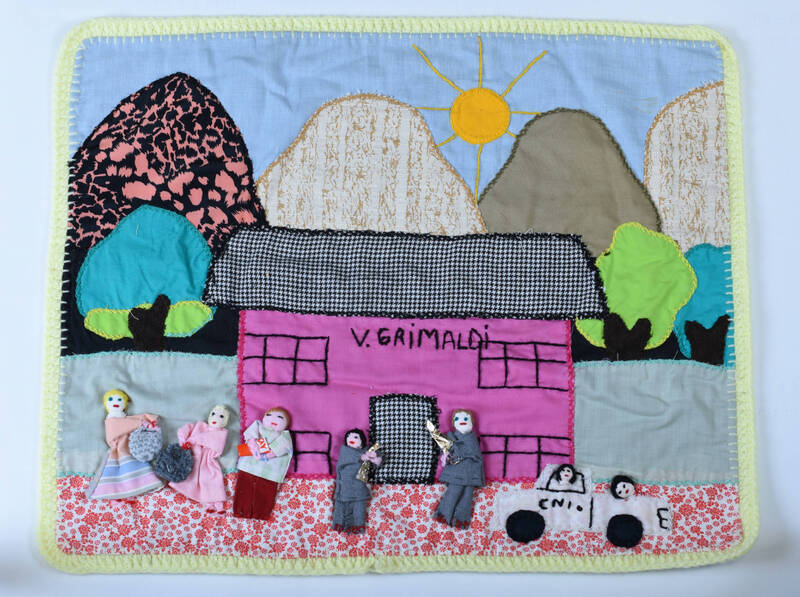
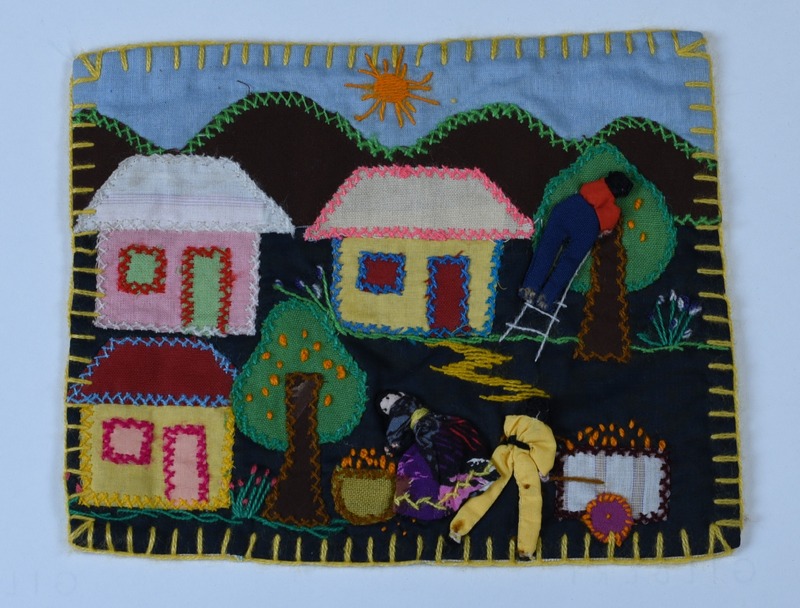
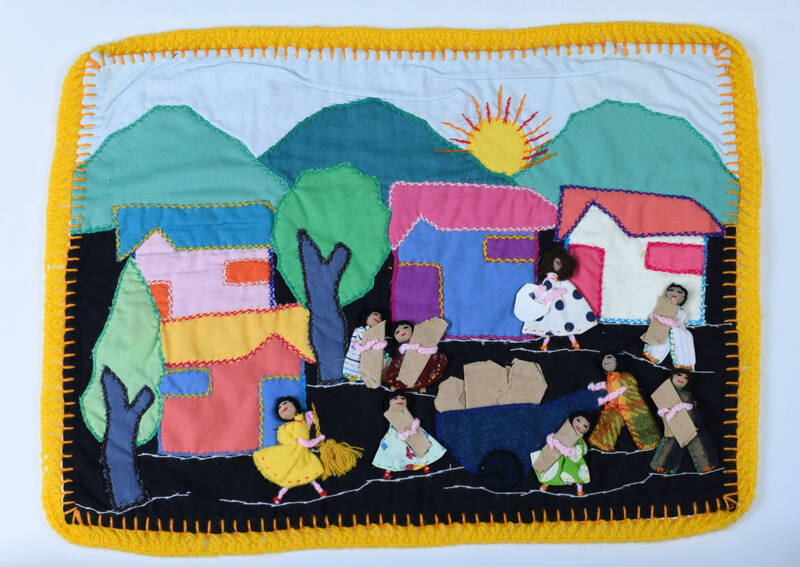
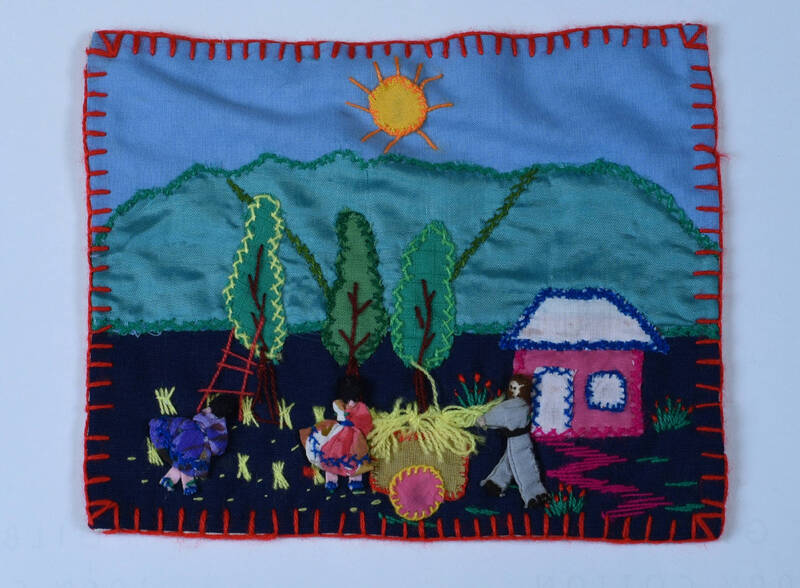
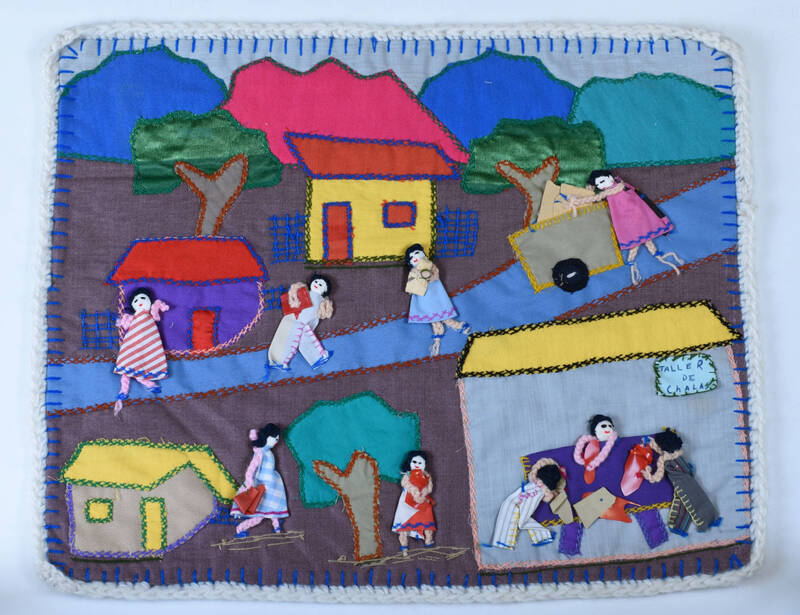
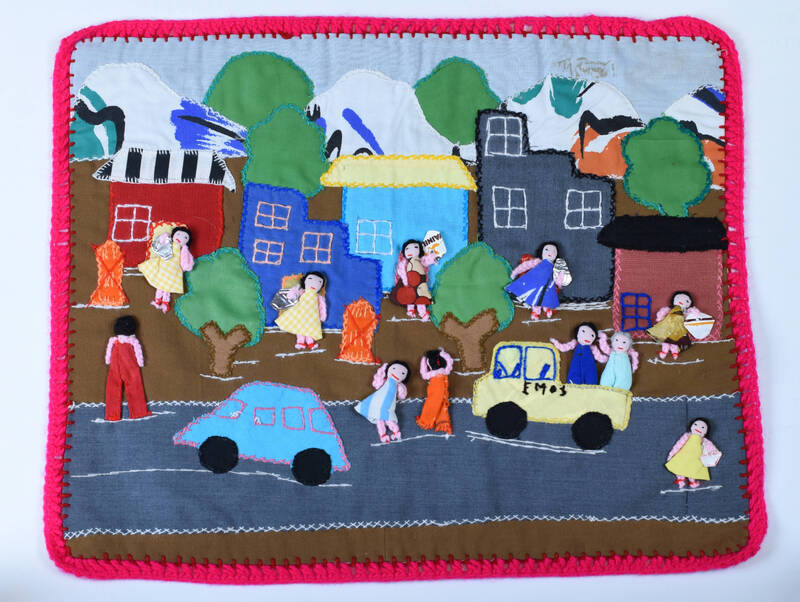
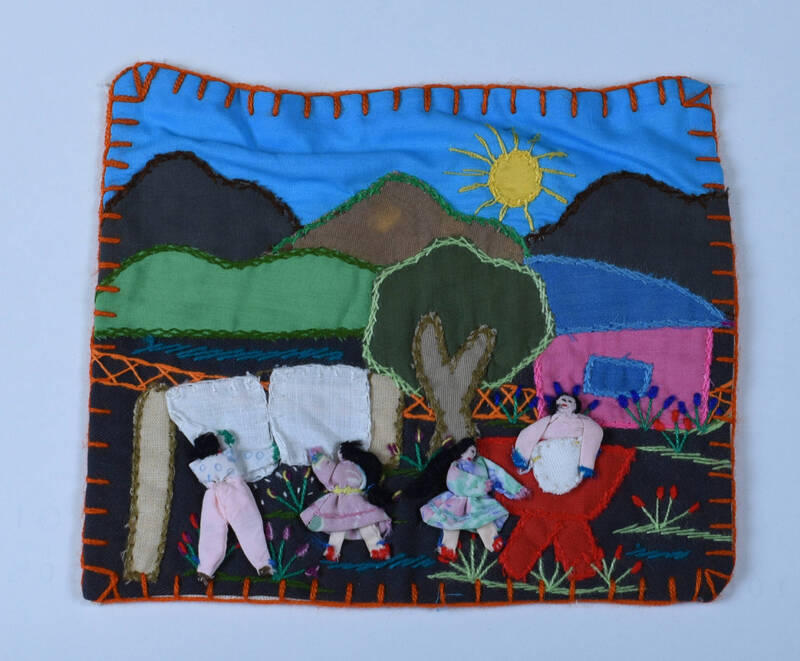
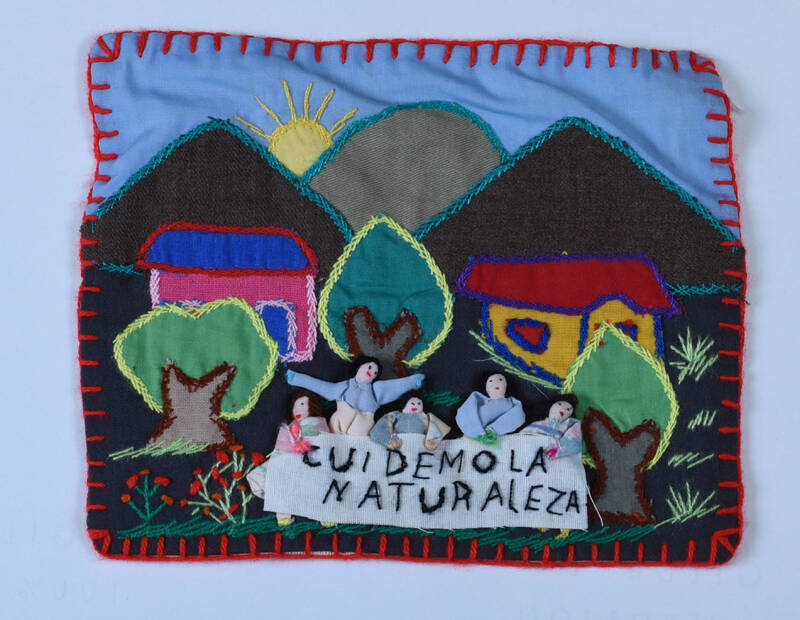
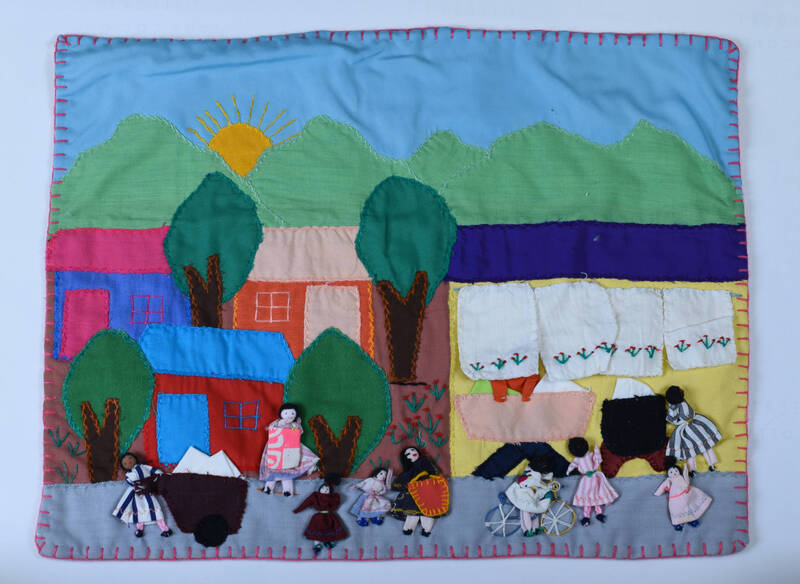
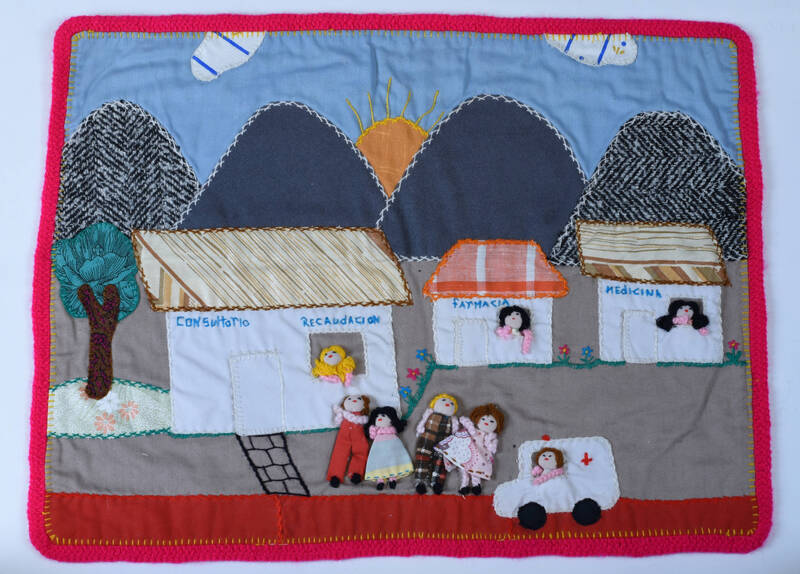
This exhibit includes detailed analyses of the arpilleras in the Center for Visual Culture at Augustana and research projects - including interactive digital Story Maps and a podcast - about the historical and geographic context of arpilleras in Chile:
- The organizing strategies and materials used by arpilleristas (arpillera-makers) in Santiago shantytowns
- The use of textiles and art forms as resistance in Chile, Jamaica, South Africa, and the United States
- The global impact of Chilean arpilleras
- Documenting the disappearances and murder of thousands of Argentinians and Chileans, including the emergence of forensic science experts in the Southern Cone
- The role of gender norms in women's social movements in Chile and the use of traditional caregiving roles to challenge human rights violations