Analysis of No Más Exilio arpillera
Item
-
Title
-
Analysis of No Más Exilio arpillera
-
extracted text
-
WillMitchell
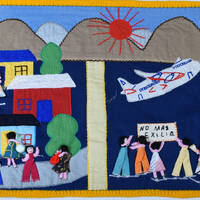
Thisarpillerahastwohalves.Theleftsidedepictsavillage,withhousesandpeople
carryingdifferentitems.Theitemsaremadeoutofwool,andthepeopleallhavepinkarms,
meaningIbelievetheyarewomen.Therighthalfshowsaplaneflyingaway,withpeopleunder
itdemonstratingbyholdingasignsaying“nomasexilio”,nomoreexile.Thereisone
backgroundforbothsides,showingmountains,likelytheAndes,andaredsun.Thisseemstobe
acoastaltown,sothesunislikelyrisingintheeastinthisarpillera.Ibelievethisistorepresent
hope,withthebloodredcolorasareminderofwhathasalreadybeenlost.Eachnewsunrise
maybeareasontohope,butitalsobringswithitmoredeathandloss.Pinochet’sbrutalmilitary
dictatorshipinChilewasknownfor“disappearing”peopledeemedtobeenemiesofthestateor
dangerstotheirregime.Amajorityofthesepeopleweremen,leadingwomentohavetolead
moreactivelivesoutsidethehometoprovidefortheirfamilies.Sometimes,peoplewere
disappearedbybeingflownintotheoceananddroppedintothewater,nevertobeseenagain.
Theplaneinthisarpillerahasmanyreddemarcationsonit,likelytosignifybloodanddeathand
�showhowplanestookpeopleawayintotheoceantodisposeofthem.Thewomen(withpink
arms)underneathprotesting,Ibelieve,aremeanttoshowhowpeopledidn’tsubmitatthetimeto
theauthoritarianregime,andthattherewasresistance.Italsogoesagainsttheideathatwomen
areweakortoofearfultodoanything,showingwomenriskingtheirlivesforwhattheybelieve
in.Thelefthalfhasmultiplelayers.Firstly,Ibelieveitismeanttoshowsomesemblanceof
normalcy,howeverydaylifecanfeelthesameasitwas.Italsoshowsthestrengthofwomen,as
theyweretheonesprovidingfortheirfamiliesandworkingthroughterriblegriefandlossto
providefortheirfamilies.Finally,itshowsthewaysinwhichpeoplebandedtogetherandhelped
eachothertosurvive.Theitemsthewomenareshowntobecarryingresemblehaphazardand
makeshiftproducts,andonewomanseemstobegettingsomethingfromanother’shome.This
wascommonaspeoplehadtohelpeachotherwiththelackofbasicgoodsbeingavailable.The
houseatthebottomoftheleftsidecouldalsorepresentanarpillera-makingworkshop,withthe
sideservingtoshowhowarpillera-makinghelpedpeopletoconnectandgetthroughthe
struggle.Peoplewereabletotalktooneanother,makeextramoney,anddosomething
meaningfulthrougharpillera-making.Thearpillera-makingworkshopbeingontheleftside
(depictingadecent-lookingtown)couldsymbolizehowarpilleraswerenotsimplyawayto
rememberandprotest,butalsoawayforpeopletogetthroughthestruggletogether.Awayfor
lifetofeellessgrim.Ibelievethetrees,likethemountains,aremeanttoshowcontinuityand
normalcythroughallthebad.Ibelievethesunbeingontherightsideofthearpillerashowsthe
balanceofthetwofeelings,howtherewerebriefmomentsofseemingnormalcyandcoming
togethertogetthroughthebrutality,butmostofthetimeitfeltlikedoingtheimpossible,
standingonwaterandprotestingataplaneflyingfurtherandfurtheraway.The“normal”
momentsinterruptedthefear,helplessness,anddesperation,nottheotherwayaround.
�

 No más exilio